Tech in Early Education?

img_6936

When asked about the role of technology in early childhood classrooms I get this little churn in the pit of my stomach. I have not embraced the need for screens for young children, and with the limited hours that my preschoolers are with me I want to offer them the very best that I can. So I have graciously declined having more than one iPad in my classroom and have removed all the desktop computers so the floor space could be used for (dare I say it) a learning center that is more developmentally appropriate. I also think in terms of economics…how many quality learning tools could I purchase with the money it would cost to buy a class set of iPads.

A few weeks ago in the grocery store a local early childhood educator that I know stopped to chat and told me she was working on her Master’s research project. Her topic of focus what technology in early ed and she was in the midst of reading 15 current research articles and soon would decide what her research would focus on.

I literally started to bite my lower lip. Positive self talk began in brain, “Be respectful, don’t jump up on soap box. Let her talk. Maybe you are getting old and grumpy, perhaps her research view might be more up to date.”

As we chatted I politely said that though other ECE providers are excited to learn that they will have 1:1 iPads for all the children in their programs, I have successfully held out. I mentioned wanting to spend more time in nature and to develop the indoor learning environment so it was play-rich, and that I believed there was no role in preschoolers needing to go to kindergarten with iPad skills.

The conversation ended politely but I thought maybe I should have a stronger opinion. Maybe I should voice my concern about the glare, the zoned-out-ed-ness, or the addiction that most all of us face with our smartphones, iPads, and laptops. Maybe I should question how our disconnected society of social media has trickled it’s way down to toddlers. Our passive consumerism now begins before our babies talk. YIKES!

So the next time someone asks my opinion I am going to reverse the question and ask them, “What kind of tasks that the child is engaged with on the screen?” I will listen attentively, and then my follow up question will be, “So is the app sort of like a digital worksheet?” Likely most conversations will end there and we will agree to disagree.

I know in my bones (and valid research supports) the fact that worksheets are NOT best practice for learners of any age, and especially more so for our youngest learners. Most apps are worksheets in disguise with cartoon characters, bright lights, things the move fast, and sounds. So just as we had to stand up and push back against spending our day completing workbooks with 3-5 year olds we need to push back against the invasion of technology.

We know that ample research proves the importance of PLAY in early childhood. We should no longer feel the need to defend our practice of creating uninterrupted blocks of time for children to play. Child-directed play where the learner gets to choose which part of the learning environment to spend their time. We need to be ready to protect play and we need to take an active in our role of explaining the value of play to our stakeholders.

This is where the one lonely iPad comes in handy. Through digital story telling, documentation panels, and/or weekly newsletters with photographs we can use the power of technology to make learning visible. We can show our administration the importance of play and demonstrate to them what the children are learning while engrossed in deep and meaningful play. Many administrators where preschool is located in a PreK-8 school have limited understanding of early childhood and developmentally appropriate practice. As professionals we can take what we know and show them through photos or videos how our children are learning and growing in all domains.

So the next time I am asked about the best use of technology in an early childhood setting I won’t have a queasy feeling in my stomach. I’ve got a boiled down one minute speech, which by the way you are more than welcome to borrow, steal, cut and paste, make into a meme, or sing from the mountaintops.

“The most powerful use of technology in an early childhood classroom is in capturing the action of ‘kids at play’. Through video, photos, or digital storytelling we can illustrate for parents and stakeholders the many ways that children grow through play. We can harness the power of technology to make visible the deep learning and engagement that happens every day in our early childhood programs.” ~April Zajko


For my college student friends – further reading from national organizations related to the topic:

NAEYC Position Statement on Technology and Media

American Academy of Pediatrics – The Power of Play 

Young Children in the Digital Age: A Parent’s Guide by Nancy Carlsson-Paige, Ed.D.

Nature-Based Play and Learning: A Literature Review


Private and Quiet Spaces

dsc_2842

Imagine in your mind a preschool classroom and likely you immediately think of a busy, noisy, and chaotic room filled with little people running to and fro. Then imagine that you are a “quiet child”, what does this busy classroom look like to you?

As an early childhood educator, I want to ensure that my classroom is welcoming and inviting to ALL children. So as I design my classroom and set up my learning centers I want to ensure that there are spaces that are offer privacy and quiet for children to go to seek solitude. This might be the writing center that is sized for just two children at a time or a listening center with only two headsets. This might also be a small table in a corner of a classroom set up with a felt board or puzzles that invites just a couple of children at once.

The expectations of these private and quiet areas are explicitly taught to the children. We work towards learning not to interrupt children who are playing in these areas, that our voices are softer, and that we call all have a turn in the area when space allows.

These quiet and private spaces are not used as a punishment, and staff don’t send children there as time out. Rather these spaces are seen as an oasis that children learn to enjoy to select on their own. I share information with parents about how we use these spaces and encourage them to create a similar area at home.

img_3140

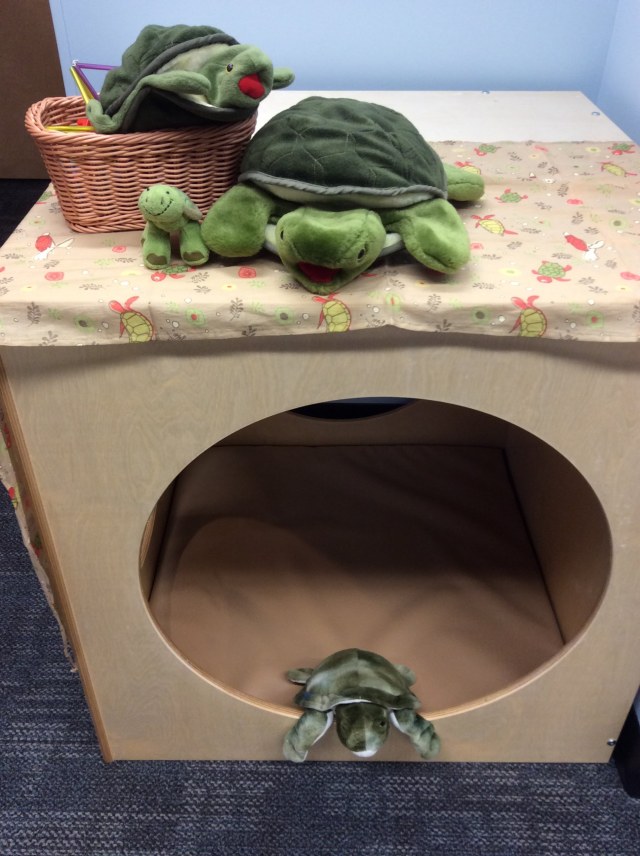
In addition to spaces for two children I also like to create an area that is designed for one child. I call this space “Tucker’s House” and introduce it after reading the book “Tucker Turtle Takes Time to Tuck and Think”. Tucker teaches young children in an age appropriate way how to manage his anger when things don’t go well. Including the soft turtle puppets and calm down toys are two other tools that support this area of the classroom. “Tucker Turtle” is a scripted story from the Center on the Social and Emotional Foundations for Early Learning, which can be downloaded for free at this link: http://csefel.vanderbilt.edu/resources/strategies.html

img_4578

I believe that creating these spaces for privacy and quiet help to empower children to know that when they feel like they need to take time to themselves that they can. Often I find that children retreat to these quieter areas and observe what is happening in other places in the room. It is important that we remember that about one third of the population is ‘introvert’ and that it is not our role to make children more extrovert.

One of the best books that I have read in my career is “Quiet: The Power of Introverts in a World That Can’t Stop Talking.” This book really helped me understand that our ‘quiet children’ do not lack energy and are not missing social skills. Instead we need to honor introverts for who they are and that means that we create space for them to be in the role of observer, time to be reflective, and support in finding quiet amongst a busy classroom environment.


Farm to School & Early Ed Resources


IMG_0504.jpg

Growing Minds Preschool Toolkit

http://growing-minds.org/farm-preschool-toolkit/

“All of our farm to preschool resources are compiled into our new Farm to Preschool Toolkit. The toolkit contains all of our preK lesson plans, “This Week in the Garden” activity guides, and “Farm to School Goes Home” weekly newsletters. It also includes sourcing guidance, tips for cooking with young children, and more!” Note: I sent mine to Staples to be printed since it is 210 pages and it cost me $16.


Multicultural Collection of Farm to ECE Books –

http://www.pareadysetgrow.org/book-list/?ct=t(Ready_Set_Grow11_28_2017)&mc_cid=93d78583de&mc_eid=b7c5f86429

“The Food Trust’s multicultural collection of farm to ECE books highlights children’s books that feature characters from underrepresented racial and ethnic groups, many of which are authored by writers of color. The list also includes a number of books that are either bilingual or written exclusively in Spanish. These books cover a wide variety of farm to ECE related topics including gardening, farms, cooking, family meals, farmers markets, shopping for food and more.”


Farm to Childcare Curriculum Package

https://www.iatp.org/files/2014_07_16_F2CC_Curriculum_f.pdf

“Inside this curriculum package, you will find activity ideas and resources for implementing Farm to Childcare at your childcare center. Many of these resources are ready to use, while some are examples that offer opportunities for you to customize to your own context. Lesson planning charts are provided to help you introduce the children at your center to locally grown food items and concepts.” Note: I sent mine to Staples to be printed since it is 176 pages and it cost me $15.


Cultivating Joy and Wonder: Educating for Sustainability in Early Childhood through Nature, Food, and Community

https://shelburnefarms.org/our-work/resources/cultivatingjoyandwonder

“Engaging activities, essays, and resources that encourage children to explore and engage in the world around them. The book is the fruit of Shelburne Farms’ years of experience in early childhood education and sustainability, both on the Farm and with partners at the Sustainability Academy and King Street Center in Burlington, Vermont”


My First Garden

http://rodaleinstitute.org/myfirstgarden/assets/pdf/rodale-hshs-program.pdf

“Rodale Institute, the birthplace of the organic movement, has put together this resource “My First Garden,” to help teachers integrate school gardens into their classroom curriculum. This curriculum is designed for preschool or kindergarten children, but could be adapted to suit early elementary school needs.”


A Roadmap for Farm to Early Care and Education: A Guide to Understanding Farm to School Opportunities in Early Care and Education Settings

http://www.farmtoschool.org/Resources/Roadmap_FarmtoECE.pdf


National Farm to School Network – Database of hundreds of resources

http://www.farmtoschool.org/resources


Every Student Succeeds Act (ESSA) and Farm to School

http://www.farmtoschool.org/Resources/ESSA_Toolkit.pdf

“In 2015, the Elementary and Secondary Education Act was reauthorized as the Every Student Succeeds Act (ESSA), and it includes many new opportunities for the integration of farm to school and ECE activities in educational settings. This toolkit is designed for educators, advocates, parents, and farm to school and ECE stakeholders to understand and act upon the opportunities ESSA provides.”


Farm to Preschool: Farm Field Trips (By EcoTrust)

http://www.farmtopreschool.org/pdf/states/or/State_OR_Howtohostapre-kfarmfieldtrip_v2.pdf

“Short guide to planning a preschool field trip to a farm, includes information on finding a farmer, example trip schedule, and supply list.”


Benefits of Farm to School (Fact Sheet)

http://www.farmtoschool.org/Resources/BenefitsFactSheet.pdf

“Farm to school programs provide a variety of benefits to students, parents, schools, communities and farmers. This fact sheet offers a research-based overview of the benefits of farm to school and a list of sources. (Updated April 2017)”


Growing Healthy Kids through Farm to Child Care

http://www.publichealthlawcenter.org/sites/default/files/phlc%20fs%20Growing%20Healthy%20Kids%20through%20F2CC%20Oct%202014.pdf

“Next to parents, child care providers can be some of the most influential people in helping children get a strong, healthy start in life. The Public Health Law Center has developed a series of resources designed to inform and support efforts to cultivate child care settings that promote healthy eating, active play opportunities, reduced screen time, and tobacco-free environments. This fact sheet explains the Farm to Child Care movement and provides tips for child care providers about how to incorporate fresh, local food and healthy food education into their programs”


 IMG_4506.jpg


Children’s Books to Inspire Gardening

IMG_1836
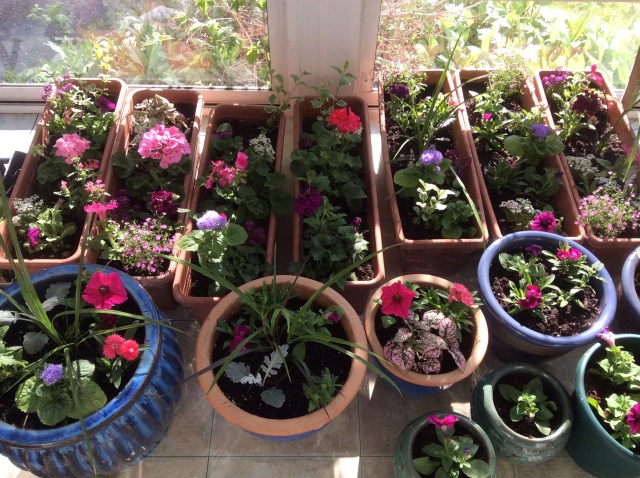
Little bitty plants for our patio planters…but oh how they grow all summer!


Books about Gardening, Vegetables & Plants:

Corn is Maize by Aliki

Eating the Alphabet – Lois Ehlert

Food Alphabet by David Drew

From Eye to Potato (Scholastic News Nonfiction Readers: How Things Grow)

How Are You Peeling? By Saxton Freymann and Joost Elffers

How Does your Garden Grow? (Little Golden Book)

Inch by Inch – The Garden Song by David Mallet

Jack’s Garden by Henry Cole

Mr. Hobson’s Garden by Marc Gave

Nuts About Nuts by Diane Wilmer and Paul Dowling

Over in the Garden by Jennifer Ward (insects)

Plants by Terry Jennings

The Popcorn Book by Tomie de Paola

The Surprise Garden by Zoe Hall

Tops & Bottoms by Janet Stevens

Vegetables in the Garden – A First Discovery Book


Books about Flowers:  

Flowers: A First Discovery Book

How to Grow a Sunflower by S. Karavis and G. Matthews

It’s Science! Plants and Flowers

Let’s Look at Flowers

Sunflower House by Eve Buntin

The Reason for a Flower by R. Hellert


Books about plant parts:

Flowers/Fruits/Leaves/Roots/Seeds/Stems by Vijaya Khisty Bodach

Books about Beans:  

Growing Beans by Peter & Sheryl Sloan (uses egg shells)

One Bean by Anne Rockwell

Scarlette Beane by K. Wallace


Books about Seeds:

A Fruit is a Suitcase for Seeds by J. Richards

A Seed is Sleepy by D. H. Aston

From Seed to Plant by Allan Fowler

From Seed to Pumpkin by W. Pfeffer

How a Seed Grows by H. Jordan

I’m a Seed by J. Marzollo (compares pumpkin to marigolds)

Just a Seed by W. Blaxland

Oh Say Can You Seed? All About Flowering Plants by B. Worth

One Little Seed by E. Greenstein

Seeds Like These by Paki Carter

Spring is Here! A Story About Seeds by Joan Holub

The Carrot Seed by R. Krauss

The Surprise Garden by Zoe Hall

The Tiny Seed by Eric Carle

We Plant a Seed (Troll First Start Science)


Books about Fruit:  

Blueberries for Sal by Robert McCloskey

Each Orange Had 8 Slices by Paul Giganti

Fruit – A First Discovery Book.

Orange Juice by B. Chessen, P. Chanko


Check out my Pinterest board for more ideas for gardening with children:

Gardening Book for Teachers

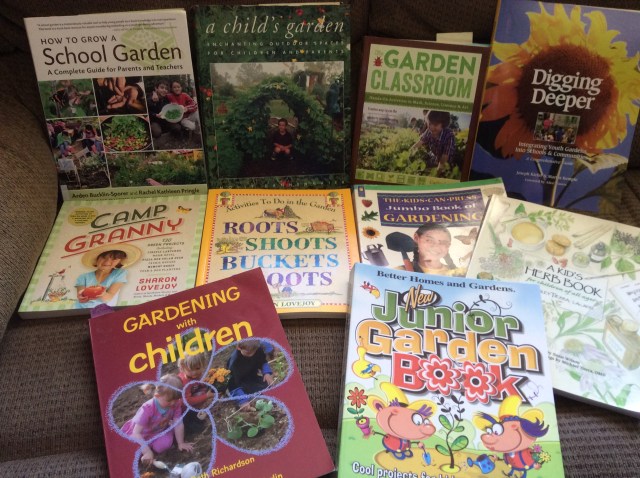
This booklist contain my favorite ‘grown-up’ books for learning about gardening with children. In another post I will share my favorite children’s books!

IMG_2595

Bucklin-Sporer, Arden. (2010). How to Grow a School Garden: A Complete Guide for Parents and Teachers.

Dannenmaier, Molly. (1998). A Childs Garden: Enchanting Outdoor Spaces for Children and Parents

James, Cathy. (2015). The Garden Classroom: Hands-on Activities in Math, Science, Literacy, and Art.

Kiefer, J. & M. Kemple. (1998). Digging Deeper: Integrating Youth Gardens into Schools and Communities.

Lovejoy, Sharon. (2015). Camp Granny.

Lovejoy, Sharon. (1999). Roots, Shoots, Buckets and Boots: Gardening Together with Children.

Moore, R. (1993). Plants for Play: A Plant Selection Guide for Children’s Outdoor Environments.

Morris, Karyn. (2000). The Kids Can Press Jumbo Book of Gardening

Tierra, Lesley. (2000). Kid’s Herb Book: For Children of All Ages.

Richardson, Beth. (1998). Gardening with Children

Rushing, Felder. (1999). Junior Garden Book- Better Homes and Gardens Books

image

Check out my Pinterest board for more information about gardening with children:

Gardening Resources Online

There are countless garden resources available online but who has time to sort through them. Since I like to integrate plants and gardening into my classroom throughout the entire year, I have created quite a variety of Pinterest boards to gather my inspiration!

IMG_2586
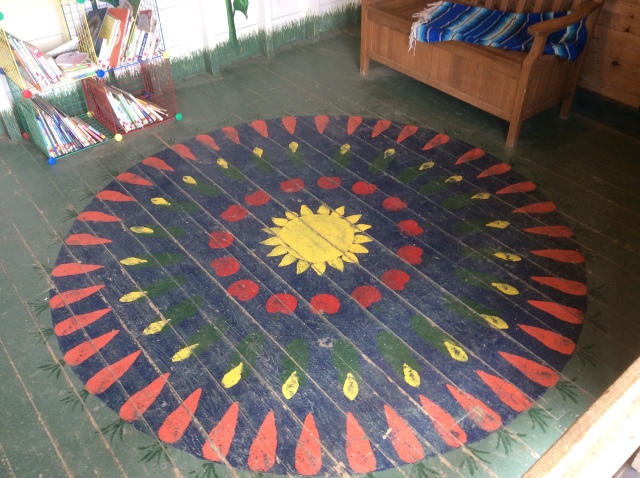
A lovely floor painting celebrating gardening! Shelburne Farms in Shelburne Vermont


Check out my Pinterest boards related to Gardening:

“Gardening with Kids” https://www.pinterest.com/azajko/gardening-with-kids/

“Garden Study for Preschool” https://www.pinterest.com/azajko/garden-study-for-preschool/

“Pumpkin Study for Preschool” https://www.pinterest.com/azajko/pumpkin-study-for-preschool/

“Bread & Wheat Study” https://www.pinterest.com/azajko/bread-wheat-study-for-preschool/

“Fall & Harvest” https://www.pinterest.com/azajko/fall-harvest-study-for-preschool/

“Forest Study” https://www.pinterest.com/azajko/forest-study-for-preschool/

“Carrot Preschool Theme” https://www.pinterest.com/azajko/carrot-preschool-theme/

“Flowers Preschool Theme” https://www.pinterest.com/azajko/flowers-preschool-theme/


IMG_2601

Gardner Supply has a great online tool to help plan a square foot garden: https://www.gardeners.com/how-to/kitchen-garden-planner/kgp_home.html


Great website full of gardeing info, sponsored by the National Gardening Association

http://www.kidsgardening.org/


Natural Learning Initiative offers lots of great outdoor design elements

http://naturalearning.org/greendesk/tag/15


Printable activities for both tots & preschoolers for a flower theme- http://www.2teachingmommies.com/2012/03/flower-unit-expanded.html


Seed & Plant Matching Cards – http://www.montessoriprintshop.com/Free_Montessori_Downloads.html


Printable mini book about life cycle of pumpkin http://carolbrookebooks.wordpress.com/tag/life-cycle-of-a-plant-mini-book/


Printable fruit/ veg shopping list & recipes http://www.activity-mom.com/2012/03/pretend-play-shopping-lists-printable.html


Printable Play Dough Mats – http://www.prekinders.com/play-dough-math-mats/


Source for the songs listed in this packet – http://www.nuttinbutpreschool.com/gardening-preschool-theme/


Printable Play Dough Garden pieces – http://picklebums.com/2013/04/09/printable-playdough-garden/


Dramatic Play lists of props for many different themes – http://www.hummingbirded.com/drama-centers.htm


Greenhouse printable & Observation log – http://kindergartencrayons.blogspot.com/2013/04/growing-beans-like-jack-did-freebie-fun.html


Printable activities for garden theme for tots & preschool kids, great printable song called “What Do Plants Need?” – http://homeschoolcreations.com/gardenpreschoolpack.html


Printable pages for a flower shop or grocery store, as well as 16 other themes. The cost is only $4 and would making setting up a new dramatic play area very easy. http://www.pre-kpages.com/dramatic-play-printables/

Gardening Theme Art Projects

IMG_2053

Thumbprint Flowers on a Canvas Bag – perhaps my favorite teacher gift ever was this lovely bag with the names and thumbprints of all my students that year. It’s a treasured keepsake and would also make a wonderful end of the year gift for all the children to receive. (Perhaps make onto t-shirts instead of bags?)

Handprint Sunflowerson large paper pre-draw a 3-4 inch circle. Help kids paint one hand yellow and make 5-6 handprints around the circle forming a sunflower. Pour on some white Elmer’s glue and glue down real sunflower seeds in the center of the circle. Add green stems and create a wonderful bulletin board display of all the children’s hands.

IMG_1804

Watercolor Sunflowers- cut out a sunflower shape, paint with liquid watercolor paints in yellow and orange, then glue on real sunflower seeds. Create the stem with a couple different green colored crepe paper. These make a beautiful classroom display!

IMG_2230

Egg Carton Flowerspre-cut individual egg cups from cardboard egg cartons and thread green pipe cleaners into the cups to form a stem. The children can paint the outside of the cups with watercolor paint and then add tissue paper to the inside of the cups using white glue. Add leaves to the stems too. (Great tool for teaching about parts of a plant)

Beans & Grain Mosaicscut out small squares from corrugated cardboard. In small cups, color Elmer’s glue several different shades. Have the kids make mosaics by coating their cardboard with glue designing it with different grains (wheat, rice) and dried beans (black, kidney, lima, etc.)

Bean Mosaic Sun-catchers – lay a small plastic lid on the table, fill the lid with Elmer’s glue, and lay in a variety of seeds. Make a pattern or design or just put in a variety. Allow to dry overnight. Pop it out of the lid, make a small hole in the dried glue, and add a ribbon so you can hang it in a window.

Stamping with Root Vegetables – prior to the kids arriving, cut potatoes cut into various shapes, cut carrots just using the ends, use the end of the celery & cut turnips in half. Adding popsicle sticks may make the printing easier. Show kids how to dip or paint the stamps and then press onto the paper. Using grocery bags, cut out one side that is print free. Kids stamp to create a garden picture. (In the fall, we do the same project but cut out a cornucopia shape to stamp onto.)

Collage Gardens – kids cut pictures from gardening magazines and seed catalogs and arrange them onto paper into their “Dream Gardens”

Soda or Water Bottle Flowers – use the bottom of plastic bottle to dip into paint or a very wet ink pad, stamp onto paper. Add stems and leaves to make the prints look like flowers.

My Garden Plans – precut paper shapes to resemble garden veggies, kids glue them onto graph paper to make a square foot garden plan.

Shaving Cream Prints spread shaving cream on trays and provide liquid water colors to drip on top. Kids swirl the paint then press a piece of paper on top to make a print. {Paper can be cut into shapes such as flowers, veggies, or trees.}

Tree or Plant Paint Blotto: Day one -fold cardstock in half and drip paint onto one side and press together. Let dry. The next day kids can add details with more paint or add collage materials.

Beaded Flowers –need pipe cleaners, beads in bright colors, and flower cookie cutters to form the shapes. Children add beads to the pipe cleaners then make the flower design by molding along the outside of the cookie cutter. Add a hanger using either dental floss or fishing line.

Painting Coffee Filter Flowers with Ice Cubes – freeze several trays of ice cubes & food coloring or paint with a popsicle stick in it. Show the children how to hold the stick and ‘paint’ with the melting ice cube. Precut the coffee filters for the children or leave as a whole circle. Once dry, add a green pipe cleaner stem.

Glitter Flowers or Plants – Have kids create thick lines of glue on wax paper (or laminate scraps). Use a q-tip or toothpick to make a plant or flower design. Sprinkle with glitter and let dry.

Spin Art Painting – using a salad spinner, lay down a thick piece of paper such as card stock. Drizzle in watered down tempera paint. Put on lid and let kids spin. Check and add more paint, if desired! The paper could be pre-cut into flower shapes.

Bubble Wrap Print Makingcut flower & plant shapes from bubble wrap, brush on paint and then stamp onto paper. Experiment with different sized bubble wrap — jumbo to tiny! Tape the bubble wrap to the table so it’s stationary and you are only moving the paper.

Check out my Pinterest board for more information about gardening with children: