The Sky Isn’t Falling: Being Present for Children


img_5404One of my favorite childhood stories was “Chicken Little” and as an early childhood teacher it’s in my top 10 read aloud books. I love this story because of the dramatics, the voices that I can use, and the how a simple misunderstanding puts everyone into a frenzy. Do you remember the story?

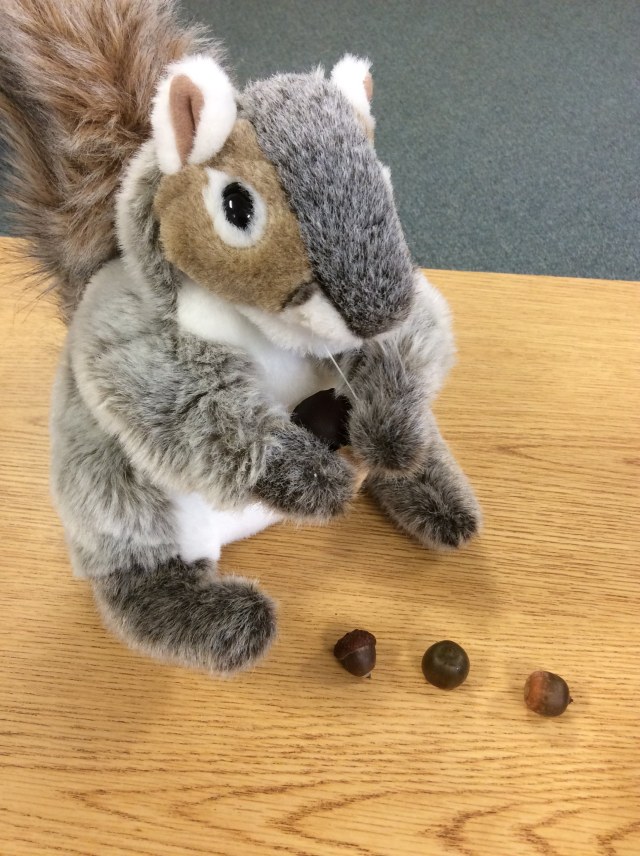
“The sky is falling, the sky is falling. I must run for my life.” And the heroine of the story, Chicken Little” is off to let the king know that something horrible has happened when, in fact, it was just an acorn that had hit her on the head.

In this classic tale, Chicken Little didn’t take time to “Stop and Think”.

Chicken Little didn’t think to reach up on top of her head to discover the source the thump. If she had she would have found an acorn and not the whole sky.

I love dissecting this story with children and talking about cause and effect. I want children to realize that sometimes things will happen to them, like a child accidentally bonking them on the head with a ball, and that it is our choice in how we react to the event. It is affirming for them to know yes, you got a bonk on your head, but why did that occur. Is it that your classmate meant to harm you or did their aim go astray when tossing the ball somewhere else? We get to teach children to reflect BEFORE they react, which really is a life lesson that we all could use.

My favorite version of this classic tale is by Rebecca and Ed Emberley because the illustrations are vivid and the dialogue is engaging. In this version ~ “Chicken Little was not the brightest chicken in the coop. He was very excitable and prone to foolishness.” This is a great phrase to explore with children, what does it mean to be “prone to foolishness”? In this version her friends are described “being witless”  and joining in without any further questions and without a plan. Lucky Ducky is described as “not wanting to be left out”, which opens the conversation about actions we take because others are doing something. In the Emberley version there is quite a plot twist at the end that is an age appropriate conversation to have with children about following someone without question.

Reading several versions of Chicken Little helps open up a discussion about how sometimes we think that ‘the sky is falling’ or some other really bad thing is happening. But if we take time to “Stop and think” and to “talk with a grown-up” that our worries might be really simple things to fix.

In most versions of this tale the main characters decide that they need to go on a journey to tell the King that there is an emergency that requires his urgent attention. This group of friends band together based on Chicken Little’s account of the incident. She had “seen it with her own eyes, heard it with her own ears, and felt it hit her head”. The sense of community that all her friends, who happen to have great names, (Henny Penny, Ducky Lucky, Cocky Locky, Goosey Loosey) help her step before the king and announce that she has discovered that the sky is falling.

After reading a couple of versions the children realize that in fact the world is not in a state of crisis. It is an acorn and not the atmosphere caving in upon itself. I try to drive home the point that if Chicken Little and her friends took the the time to “Stop and Think” they would have likely discovered the acorn themselves. (How empowering!) Or if they were that concerned that they could go to a grown up in their life and they would have helped them realize what was happening without needing to go on such a long journey.

So much valuable teaching from a classic tale!

With my grown-up students that I reach through leading professional development and community college there are also lessons for adults. In modern day, social media driven society, think of the many times that a perceived threat is magnified by a group of well being friends.  The hint of a scandalous story or revelation of a vague post by a friend leaves us wondering.  The quakes of social media with Twitter wars, viral videos, and Facebook feuds that suck us in and we spend way too much time on a screen journey. Isn’t this much like Chicken Little….are we running in a circle trying to help restore social order?

Society is defined as when two or more humans connect and interact. Those interactions are so much more important in real life, and our sense of belonging comes from working together.  As parents and care providers we need to focus on ‘social order’ of our homes or our classrooms which is where we have a meaningful impact. If we are constantly distracted with our screens and technologies are we really able to connect with our children, spouses, coworkers, and friends?

For people who work with children a daily basis it is so important to stay present in the NOW. Listening and interacting with the children in our care. Helping them to develop their own sense of belonging and to find their voice to communicate how they are feeling. Assisting children in expressing their own unique creativity through engaged PLAY. Honoring children’s stories and helping them to discover who they are. Offering learning environments built on mutual respect, safety, and the belief that every child matters. To do this work we must be in the present moment, and NOT on a screen.

As the adults in the learning environment we need to leave our grown up conversations about politics, current events and judgements at home. When doing the important work of caring for children we need to focus on building empathy and creating safe haven. We need to realize that TIME is the most important resource that we have, so we bring our best self into our programs and we focus on the children and families that we serve.

Though someone else might think the “sky is falling” and is alerting the world via social media, we do not need to like, retweet, or comment on it while we are working. Instead, we need to be fully present…exploring the acorns alongside the children!


Tech in Early Education?

img_6936

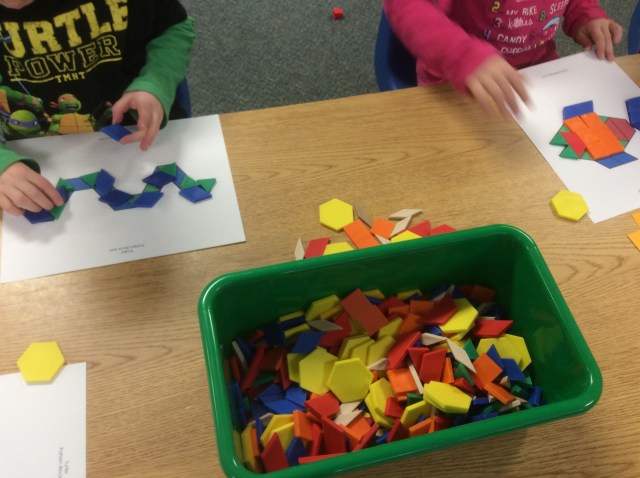
When asked about the role of technology in early childhood classrooms I get this little churn in the pit of my stomach. I have not embraced the need for screens for young children, and with the limited hours that my preschoolers are with me I want to offer them the very best that I can. So I have graciously declined having more than one iPad in my classroom and have removed all the desktop computers so the floor space could be used for (dare I say it) a learning center that is more developmentally appropriate. I also think in terms of economics…how many quality learning tools could I purchase with the money it would cost to buy a class set of iPads.

A few weeks ago in the grocery store a local early childhood educator that I know stopped to chat and told me she was working on her Master’s research project. Her topic of focus what technology in early ed and she was in the midst of reading 15 current research articles and soon would decide what her research would focus on.

I literally started to bite my lower lip. Positive self talk began in brain, “Be respectful, don’t jump up on soap box. Let her talk. Maybe you are getting old and grumpy, perhaps her research view might be more up to date.”

As we chatted I politely said that though other ECE providers are excited to learn that they will have 1:1 iPads for all the children in their programs, I have successfully held out. I mentioned wanting to spend more time in nature and to develop the indoor learning environment so it was play-rich, and that I believed there was no role in preschoolers needing to go to kindergarten with iPad skills.

The conversation ended politely but I thought maybe I should have a stronger opinion. Maybe I should voice my concern about the glare, the zoned-out-ed-ness, or the addiction that most all of us face with our smartphones, iPads, and laptops. Maybe I should question how our disconnected society of social media has trickled it’s way down to toddlers. Our passive consumerism now begins before our babies talk. YIKES!

So the next time someone asks my opinion I am going to reverse the question and ask them, “What kind of tasks that the child is engaged with on the screen?” I will listen attentively, and then my follow up question will be, “So is the app sort of like a digital worksheet?” Likely most conversations will end there and we will agree to disagree.

I know in my bones (and valid research supports) the fact that worksheets are NOT best practice for learners of any age, and especially more so for our youngest learners. Most apps are worksheets in disguise with cartoon characters, bright lights, things the move fast, and sounds. So just as we had to stand up and push back against spending our day completing workbooks with 3-5 year olds we need to push back against the invasion of technology.

We know that ample research proves the importance of PLAY in early childhood. We should no longer feel the need to defend our practice of creating uninterrupted blocks of time for children to play. Child-directed play where the learner gets to choose which part of the learning environment to spend their time. We need to be ready to protect play and we need to take an active in our role of explaining the value of play to our stakeholders.

This is where the one lonely iPad comes in handy. Through digital story telling, documentation panels, and/or weekly newsletters with photographs we can use the power of technology to make learning visible. We can show our administration the importance of play and demonstrate to them what the children are learning while engrossed in deep and meaningful play. Many administrators where preschool is located in a PreK-8 school have limited understanding of early childhood and developmentally appropriate practice. As professionals we can take what we know and show them through photos or videos how our children are learning and growing in all domains.

So the next time I am asked about the best use of technology in an early childhood setting I won’t have a queasy feeling in my stomach. I’ve got a boiled down one minute speech, which by the way you are more than welcome to borrow, steal, cut and paste, make into a meme, or sing from the mountaintops.

“The most powerful use of technology in an early childhood classroom is in capturing the action of ‘kids at play’. Through video, photos, or digital storytelling we can illustrate for parents and stakeholders the many ways that children grow through play. We can harness the power of technology to make visible the deep learning and engagement that happens every day in our early childhood programs.” ~April Zajko


For my college student friends – further reading from national organizations related to the topic:

NAEYC Position Statement on Technology and Media

American Academy of Pediatrics – The Power of Play 

Young Children in the Digital Age: A Parent’s Guide by Nancy Carlsson-Paige, Ed.D.

Nature-Based Play and Learning: A Literature Review


Feathers and Friendship

img_24871

This past summer we went to visit a friend who had relocated to the west coast, and who I have been missing since the previous summer. The summer before, she and her family had sold their house, packed up the RV, and headed ‘back home’ where she and her husband had grown up. She graciously posted regularly on Facebook so I continued to feel connected to her, their journey, and the setting of new family roots.

I have to say that Sarah is one of the kindest, gentlest, most caring, and giving people that I have ever met. I liken her to Mother Teresa but a bit more witty and sassy! When she announced that she was going to be moving I felt heartbroken for her little Vermont town, because she volunteered so much, and, selfishly, was sad for my own self. Even though I didn’t get to spend much ‘in real life’  time with her during the school year we always made a plan to reconnect at our local lake during the summer. Our friendship was mostly through Facebook, so I knew that wouldn’t change, but previously I knew I had solace in knowing that I could make the short 20 minute drive to hang out at any time.

Like many of the friends that I had made when our children were toddlers or preschoolers our adult relationships began to change once our children were enrolled full time in school. I had savored the years that I was a stay-at-home or work part-time mom because I knew that I wanted to be fully present when my own children were young. I found camaraderie with other moms who were making a similar decision and we scheduled play dates or meet ups, and I think we did so as much for us “moms” to connect as we did for the kids to have time together. However, life began to get busy when our children become enrolled in school for a full day and we ourselves attempted to get our own careers back on track. Somehow these little people also now began to have their own social calendar and many of my “mom friends” and I drifted apart as our new duty of “chauffeur” became to eat up much of our free time.

For Sarah and I our children never ended up on the same soccer team or Little League, and so seeing each other in person was rare during the school year. The one overlap was a extended once-a-week children’s music series during early 2015. The focus was on Abenaki music and I was hopeful they would let us moms that wanted to stay on site sit in a little room off of the main room. The drumming, singing, and community during that course felt wonderful and I remember talking to Sarah each week about the progression of my mom’s cancer. She knew that I had just lost my father less than a year ago and she was so kind and sensitive in talking to me about this added grief of watching my mom slip away. Though she didn’t know it, seeing her each week and talking while our children explored Native songs was such a support to me. I realize now that sometimes it’s those little life lines that just keep you afloat when life seems overwhelming, and I knew then if I ever needed to reach out to her I could.

The following year my sweet friend lost her father to cancer, and we now shared that pain of the loss of our fathers. As her father’s disease progressed I reached out to find ways to help and never felt sure how to be there. I wished that our kids shared some sort of after school activity so we could see each other on a weekly basis but they didn’t. She worked from home so I couldn’t just happen to stop by at her job, so I was not sure how to connect with her without invading her privacy. In hindsight, I wish I had convinced her to have a standing weekly mom hang-out (or even monthly), but somehow it never seemed right to prioritize “mom time” over kid chauffeuring, work, or domestic chores.

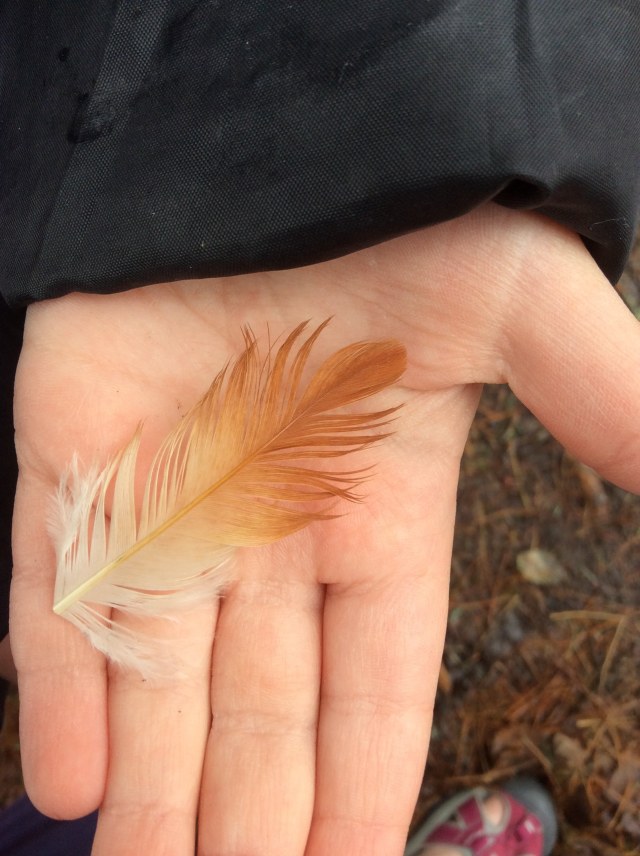
Thankfully, last summer we did get to reconnect in real life. We went to visit Sarah and family in their new home on the West Coast. It felt so warm and welcoming to be there with them, and our families got to spend more time together than we probably had collectively in the whole time we’ve known them. Sarah and I had time to have some so great conversations, we all  got to explore nature together, we feasted on crab we caught, and we all had a wonderful time together. Sarah shared that one of the ways she and her children know that her dad is shining down of them is when they find random feathers in nature, which is something that I felt about my own dad since his passing. So on the morning of our departure, after we said our goodbyes inside the house, my own family and I were in our car about to back out of their driveway. We took a moment to pause and immediately noticed a feather randomly floating from the sky. We all watched it float down and gently land on branch of a tree next to the driveway. I wanted to run inside to tell Sarah what happened, but then thought I should wait and instead write about it. I should use that little story to tell her how much her kindness means to me, and though we don’t get to sit in cafes and sip coffee together, I am always only a click or phone call away. Somehow it feels weird in a digital age to find ‘in real life’ friends, and somehow taking the time to tell others how we feel becomes risky, and it shouldn’t. So I have no empirical proof but I bet that feather was tossed down from BOTH of our dads, encouraging us BOTH to continue on being our true, kind-hearted, altruistic, and giving selves despite what the state of the world might be. That feather floating down from the sky was such a tender moment and one that reminds me of the power of friendship and faith.

Rabbit Hole

IMG_6614It’s so easy to log onto the computer in search of something, but fall into a never ending rabbit hole. I find this especially to be the case when I go looking for a new idea for my classroom. The eye candy of Pinterest, the thoughtful words of a teacher blog, and the quality resources on NAEYC are often the three main destinations of my rabbit hole journeys. {Oh wait…something on Facebook caught my eye, who just posted this funny video of two toddlers stealing each other pacifiers?}

I often start off on the path with a specific goal in mind (hmmm…how could I make my daily calendar time more child centered), but then I get sidetracked by other brilliant ideas, interesting looking activities, and delicious looking recipes. I change direction many times during one of these (near daily) rabbit hole adventures. I end up somewhere I didn’t know that I was headed, somewhere unexpected, and most often, somewhere inspiring. Quite often I never really fulfill the goal of my original quest before I realize it’s time to log off and rejoin reality. {You know, like make a real dinner for the family instead of pinning scrumptious desserts.}This of course means that tomorrow, I have reason to go back again to seek my answer. Luckily this meandering path often turns out to be more productive than a quick answer to my initial question since my discoveries often inspire my teaching, and give me new questions to ponder on my journey to be a be a lifelong learner.

Often on these serendipitous excursions, I yearn to create and share content on the web myself. As a way to share my voice, my experiences, and my passions, I often wish I had enough time to maintain my own website. In fact, if I reigned in my time on my journeys, I could create the time to write and publish. Perhaps this is the year that I commit to writing a weekly blog, so others might reach my thoughts along their own journeys. In fact, if you are reading this, you likely set out seeking an answer and found your way here!